Please support the blog via Wise.
Introduction
The relationship between language and thought has been debated for more than a century. The Linguistic Relativity hypothesis proposes that language influences habitual cognition, whereas the Mentalese hypothesis argues that thinking occurs in an abstract representational system largely independent of spoken language. Although these perspectives are often portrayed as competing explanations, they may instead describe different levels of cognitive organization.
Finland and Sweden offer an unusual opportunity to examine this question. The countries share many demographic, economic, and historical characteristics, yet differ substantially in language. Swedish belongs to the Indo-European language family, whereas Finnish belongs to the Uralic family and has evolved largely independently of its Indo-European neighbors. At the same time, comparative cultural studies frequently describe Finnish institutions as emphasizing consensus, institutional continuity, and respect for established expertise, while Swedish institutions are often characterized by dialogue, flatter hierarchies, and greater openness to debate. Whether these differences influence scientific and organizational learning remains an open empirical question.
Linguistic Relativity Revisited
Strong versions of the Sapir–Whorf hypothesis, claiming that language determines thought, receive little empirical support today. However, the weaker version—linguistic relativity—has accumulated considerable evidence demonstrating that language influences habitual attention, categorization, memory, and reasoning.
Language therefore appears not to determine cognition but to bias cognitive processing. Such biases may become particularly influential during early childhood, when language acquisition coincides with rapid development of executive functions.
Mentalese and Universal Cognition
The Mentalese hypothesis proposes that human thought operates through an internal representational language independent of natural languages. If correct, Finnish and Swedish speakers should possess similar underlying cognitive architecture despite differences in grammar and vocabulary.
The present review argues that Mentalese and Linguistic Relativity need not be mutually exclusive. Mentalese may explain universal cognitive capacities, whereas natural languages shape the cultural environments within which those capacities develop and are expressed.
Language as a Vehicle of Cultural Transmission
Recent work in cultural evolution provides an important bridge between these theories. Cavalli-Sforza described language as one of humanity's principal mechanisms for transmitting culture across generations. Pagel similarly argued that language enables cumulative cultural evolution, while Reich emphasized that language frequently accompanies the long-term transmission of cultural traditions, institutions, and identities.
This perspective shifts attention from language as a cognitive constraint to language as a cultural inheritance system. The present review therefore proposes the following theoretical proposition:
Language transmits cultural systems. Cultural systems shape early socialization. Early socialization contributes to executive-function development and epistemic norms. These developmental processes influence organizational learning and the persistence of scientific paradigms.Executive Functions as a Developmental Mechanism
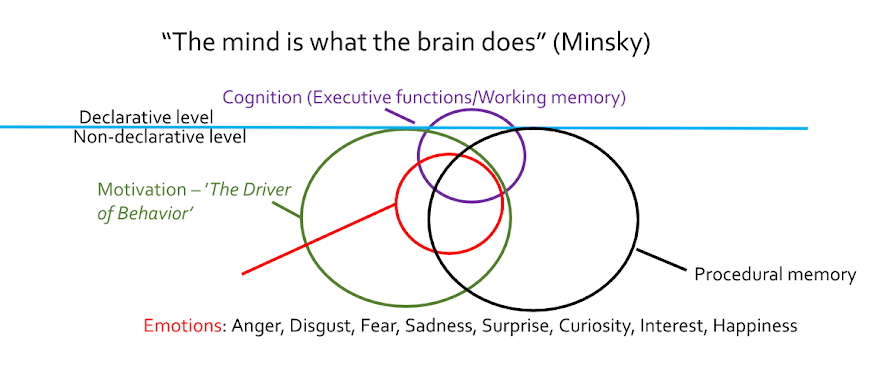
Executive functions develop rapidly during the preschool years and are strongly influenced by parent-child relationships, emotional security, educational practices, and opportunities for self-regulation. Rather than assuming that language directly modifies executive functioning, the present model proposes that language preserves cultural practices that influence developmental environments.
This distinction is critical. Finnish language is not hypothesized to alter executive functions directly. Instead, it may help preserve a cultural system that has evolved partly independently of neighboring Indo-European societies, thereby contributing to differences in parenting practices, educational expectations, communication norms, and institutional behavior.
Epistemic Norms
Executive functions alone cannot explain scientific change. Individuals possessing equivalent cognitive flexibility may nevertheless differ in their willingness to challenge authority or embrace theoretical novelty.
The present review therefore introduces epistemic norms as an intermediate construct. Epistemic norms refer to culturally transmitted expectations regarding uncertainty, authority, disagreement, intellectual risk-taking, and the legitimacy of revising established knowledge.
These norms may explain why comparable cognitive abilities produce different rates of innovation across organizations and scientific communities.
A Multilevel Model
The proposed framework integrates developmental psychology, cultural evolution, organizational learning, and the sociology of science:
Language
↓
Cultural transmission
↓
Early socialization
↓
Executive-function development
↓
Epistemic norms
↓
Organizational learning
↓
Scientific paradigm persistence
Unlike classical interpretations of Linguistic Relativity, this model does not assume that language determines thought. Instead, language serves as a stable mechanism through which cultures reproduce developmental environments across generations.
Finland and Sweden as a Natural Experiment
Finland and Sweden represent an informative comparison because they share many structural similarities while differing substantially in language and aspects of institutional culture. If linguistic communities maintain different cultural transmission systems over centuries, these systems may influence developmental pathways that ultimately affect organizational behavior and scientific institutions.
The proposed model predicts that differences in communicative norms, attitudes toward authority, and tolerance for theoretical novelty should be observable not only within academic communities but across organizations more generally.
Conclusion
The long-standing debate between Linguistic Relativity and Mentalese may be resolved by recognizing that they address different levels of explanation. Mentalese describes universal cognitive architecture, whereas linguistic relativity describes how language contributes to culturally specific developmental environments.
Rather than asking whether language determines thought, future research should investigate how language transmits culture and how culture shapes the development of executive functions, epistemic norms, organizational learning, and scientific change. Finland and Sweden provide an exceptional comparative setting for testing this multilevel developmental hypothesis.
Please support the blog via Wise
More about my expertise.
Executive coaching for CEOs/managers and workshops to facilitate Organizational Performance, Learning, and Creativity for Problem Solving | Lectures: Nutrition for physical and mental health | Course/lecture: children's emotional and social adjustment and cognitive development | Language training – Swedish | Academy Competency | CV | Teaching skills and experience | Summary of research project | Instagram | Linkedin | YouTube-channel | TikTok | X
No comments:
Post a Comment