Please support the blog via Swish (Sweden), MobilePay (Finland), or Wise.
Finland's largest tabloid reports that schools and kindergarten are buying armors to protect themselves against children.

Link to source.
Why is this happening?
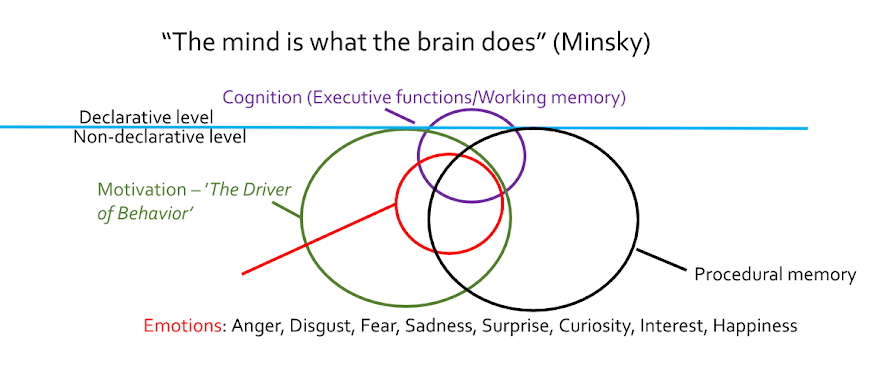
Children's emotional and social adjustments, as well as cognitive development, unpack, adjust, and develop during the first 4-5 years of living. This is also referred to as the executive functions – a set of emotional and cognitive abilities that allow individuals to plan, organize, guide, regulate, and evaluate behavior forward in time. It's a broad concept containing several subsets which help us to be both instrumentally and epistemically rational in a prospective manner (Adornetti, 2016; Ardila, 2008; Ardila et al. 2018; Atance and O'Neill, 2001, 2005; Baker et al. 2020; Barkley, 2001; Baumrind, 1966; Coolidge and Wynn, 2018; Farran och Formby, 2011; Galistel, 2017; Gilbert och Wilson, 2007; Kaku, 2014; Lezak, 1982; Liu et al. 2017; Moulton and Kosslyn, 2009; Pluck, Cerone and Villagomez-Pacheco, 2023; Pringle, 2016; Schacter och Addis, 2007; Suddendorf, Bulley, and Miloyan, 2018; Szpunar et al. 2014).
Early education lays the foundation for entrepreneurial thinking and social creativity for problem solving and innovation (Cacciolatti och Lee, 2015; Mitchell et al. 2002; Österberg, 2012; Wynn, Coolidge och Bright, 2009).
If early upbringing fails, the result is executive dysfunction* (Elliott, 2003) and in some cases antisocial behavior (Calkins och Keane, 2009; Moffitt et al. 2001).
According to science-based studies, children who grow up with both parents or the father have better emotional and social adjustment, as well as cognitive development, compared to children who grow up with a single mother (LaFlamme et al. 2012; Olsson, 2022; Rolle et al. 2019; Sethna, 2017; Vieno et al. 2009, 2014; Österberg, 2004):
“A review of 28 studies on the effects of father absence on children's cognitive ability (Shinn, 1978) indicates that father absence as a function of divorce is negatively related to intellectual competence in children; this has also been demonstrated in previous studies (Blanchard & Biller, 1971; Crescimbeni, 1965; Ferri, 1976; Hetherington et al., 1978, 1982; Radin, 1976; Radin et al., 1994; Santrock, 1972; Sutton–Smith et al., 1978). Shinn (1978) believes that the results of the review are consistent with the hypothesis that children's interaction with their parents forms a platform for cognitive development, and that a reduction in this interaction inhibits cognitive development” (Österberg, 2004, s ).Studies using proper measures, e.g. the Conflict Tactics Scale (CTS; Straus, 1979; Straus et al. 1996) shows the following pattern:
- Physical violence – women account for more than half of occurrences and injuries.
-
Lethal violence – equally unlikely (0.0000005) to affect children, men or women (Liem och Koenraadt, 2008). In filicide, however, the typical perpetrator is a mother. Recently, five (5) children died from maternal violence.
- Psychological violence (relational aggressiveness) includes custodial conflicts and parental alienation and is typically a female behavior – typically female.
Listen to Dr Elizabeth Bates:Intimate Partner Violence (34 minuter).
In Finland:
- women's relational aggressiveness is their biggest challenge to deal with (Helsingfors police, April, 2022).
- Finnish school children fail reading comprehension and numeracy (the Ministry of education and culture, May, 2022).
- 40% of Finnish school kids are victims of psychological violence at home (Estlander, November, 2023).
Also read:
Women's domestic violence, diet-heart hypothesis, and ADHD. The case for Typ 1 & 2 errors and malnutrition
Profiles of climate change distress and climate denialism during adolescence: A two-cohort longitudinal study. Another case of science denial
Nutrition psychology. ADHD and Alzheimer's disease in Finland. Nurture is more likely explanation compared to nature
Please support the blog via Swish (Sweden), MobilePay (Finland), or Wise.
More about my expertise:
Executive coaching for CEOs/managers and workshops to facilitate Organizational Performance, Learning, and Creativity for Problem Solving | Lectures: Nutrition for physical and mental health | Course/lecture: children's emotional and social adjustment and cognitive development | Language training – Swedish | Academy Competency | CV | Teaching skills and experience | Summary of research project | Instagram | Linkedin | YouTube-channel | TikTok | X
No comments:
Post a Comment